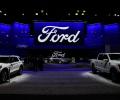
'We participate in the design/development of components and systems for electric vehicles, internal combustion engines, and hybrid vehicles.'

The electric vehicle evolution in India's passenger vehicle market has remained frozen in time and may see limited adoption over the next decade, experts say.
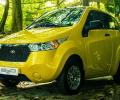
The e2o is manufactured by Mahindra Reva Electric Vehicles.
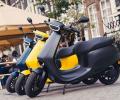
Electric two-wheelers have zipped past the half-a-million registration mark and achieved a market penetration of 4 per cent at the fag end of Calendar 2022, according to data released by VAHAN. According to VAHAN data for the year (until December 27), 560,000 two-wheelers were registered in the country, up a staggering fourfold over 2021, when only 136,000 were registered, and when electric vehicle penetration was a mere 1.05 per cent. The total number of two-wheelers (internal combustion engine, or ICE, and electric) registered so far in 2022 stands at 14.5 million, up only 12.7 per cent over the previous calendar year.

Model 3 received 180,000 orders worldwide.
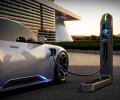
At Prestige Polygon Towers in Chennai's Teynampet, hectic preparations are on for a mega global investors' meet under the aegis of Guidance Tamil Nadu (the state investment promotion agency) scheduled for January 2024. Asked about the key focus areas of the meet, the agency's managing director and chief executive officer, V Vishnu, said the state was betting big on electric mobility. This is no surprise, given that the state has signed electric vehicle (EV)-related memorandums of understanding (MoUs) with several companies in the recent past that may bring in investments worth around Rs 33,000 crore with the potential to create over 43,000 job opportunities.
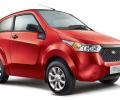
If the drop in sales over the past two years is anything to go by, India's dream of putting seven million electric vehicles on road by the end of this decade has come a cropper.
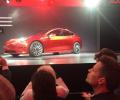
The vehicle will not be available until end-2017, or later.

In October, the company had launched Ciaz in both petrol and diesel options.
'We are not asking for incentives, but at least taxation can be aligned such that the rupee tax on consumers remains the same.'

The major reason for the policy confusion over e-vehicles is the lack of conviction within government about the utility of this disruptive technology and its role in India's larger Paris Agreement climate change commitments.

'The scheme excludes tractors, light commercial vehicles, and medium and heavy commercial vehicles.'

Sales of electric vehicles (EVs) in July touched 178,948 units, marking the highest monthly sales this financial year. This represents a 27.9 per cent increase from June, which saw 139,905 units sold, according to the Vahan data from the Ministry of Road Transport and Highways. The strong performance in July contributed to more than one million being sold in the first seven months of the calendar year.
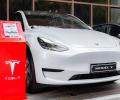
With India's EV penetration at just 2.5 per cent, the market presents an opportunity -- provided Tesla gets its pricing right.
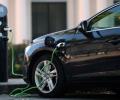
Government needs to promote electrification and charge points and make sure India has stable power supply.

Why is Shailesh Chandra, managing director of Tata Motors Passenger Vehicles and Tata Passenger Electric Mobility, not worried about the competition?

Electric vehicle (EV) sales in India topped the 1 million mark in less than nine months in 2023, a milestone that took an entire year in 2022. According to data from the Ministry of Road Transport and Highways' Vahan Dashboard, 1,037,011 EVs were registered with regional transport offices till September 19, accounting for 6.4 per cent of the total automobile sales in the country this year. The sales surge can be attributed to increased individual purchases as well as business-to-business (B2B) acquisitions by EV fleet operators, industry sources said.

India is sceptical that Tesla might import into the country cars made in China. Tesla executives were in India last month and appear to have proposed a factory in the country. But do not be surprised if that does not happen in a hurry.

Hyundai aims to raise exports to 30% of output by FY30 as domestic sales slow; six EVs among 26 product launches planned as part of long-term growth strategy.

Two Japanese auto giants, Honda and Nissan, are moving towards a potential merger, but it remains unclear how their Indian operations will be immediately impacted.

As Modi's government embarks on its third term, apart from ensuring these schemes boost India's green mobility, addressing bottlenecks like battery swapping and meeting PLI deadlines are likely to be the government's major tasks.
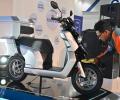
Based on discussions with stakeholders, the ministry is proposing to allocate Rs 26,400 crore for FAME-III subsidy alone with electric two wheelers getting around Rs 8,158 crore, electric buses Rs 9,600 crore and electric three-wheelers Rs 4,100 crore, according to sources in the know. Along with some other components like setting up an innovation fund and money for testing , the total allocation could cross Rs 33,000 crore, estimates suggest.

"There were discussions and the ministry had received suggestions that petrol-diesel vehicles should be banned. I would like to clarify that the government does not intend to ban petrol and diesel vehicles. We are not going to do anything like that," Gadkari said, addressing a gathering at the Society of Indian Automobile Manufacturers (SIAM) annual convention, 2019.

According to research by IHS Markit, for an ecosystem still grappling with infrastructure issues -- the high cost of EVs and a greater OEM (original equipment manufacturer) focus on electrifying two-wheelers and commercial vehicles first -- the share of such vehicles is expected to be 4 per cent by 2030, reports Pavan Lall.

London Mayor Boris Johnson officially welcomed the introduction of the buses.

10 largecaps stocks which stand to gain from the Budget.

The Centre on Wednesday scrapped the mandatory human safety tests for electric vehicle (EV) batteries required to qualify for incentives under various government schemes. The ministry of heavy industries, in its fresh guidelines, has made compliance with the ministry of road transport and highways (MoRTH's) prevailing EV battery testing standards the only requirement to get incentives under the Centre's various incentive schemes.
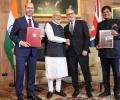
India and the UK on Thursday inked a landmark free trade agreement (FTA) that will cut tariffs on British whisky, cars and an array of items, besides boosting bilateral trade by around $34 billion annually.
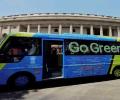
Five cities -- Delhi, Bengaluru, Kolkata, Hyderabad and Surat -- ceded their power of procurement and agreed to a different procurement model to operate state-run buses.

Subsidies have been stopped for several manufacturers that are under investigation for alleged violations of local-sourcing rules.
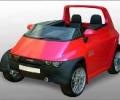
Industry executives say the government could help in lowering prices of green vehicles by encouraging domestic research and development.

A host of passenger and commercial vehicle manufacturers displayed 'green' vehicles at the Auto Expo. Maruti Suzuki, Hyundai and Tata Motors displayed 100 per cent plug-in electric car concepts, while commercial vehicle manufacturers like Ashok Leyland displayed concept hybrid buses, fuelled both by electricity and diesel.
Manufacturers of electric vehicles (EVs) have been lukewarm to the ad hoc subsidy scheme announced by the Centre for them. Sector majors have not been enthused by the lower level of incentives in the scheme, which has replaced the flagship Faster Adoption and Manufacturing of Electric (and Hybrid) Vehicles-II. Moreover, increased stringency in claiming subsidies and delays in disbursement have been cited by several original equipment manufacturers (OEMs).
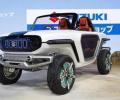
The e-SURVIVOR symbolises Maruti Suzuki's commitment to help develop the entire life cycle of EVs in India

Ola Electric's technology team is working hard to iron out the technical kinks that marred the electric vehicle company's hyped online sale of its electric scooters (e-scooters) - the S1 and the S1 Pro - on Wednesday, said company sources. The SoftBank-backed firm is facing technical difficulties in making the website live for the purchase of its e-scooters. According to company sources, the website couldn't go live as there were integration issues.
as the FAME II deadline of March 31, 2024, nears, EV manufacturers are worried about their investments and future plans.

During the six-day-long event, automakers have planned 10 global launches, 26 India specific launches, six concept vehicles, seven facelifts and 21 vehicle unveilings.

GST will yield 'better value for money' for car buyers, increasing automobile industry demand, says Sandip Neogi.
The much awaited Mahindra e20 launched on Tuesday.

The Honda City is an iconic brand for the Japanese carmaker
